Wednesday, December 3, 2014

‘Tis The Season

It’s December, which means that in addition to the holiday season, it’s also time for our 11th Annual LA 3-D Movie Festival. This year’s fest is co-presented with 3-D SPACE, Stereo Sisters, and the Downtown Independent, and will take place over three days, December 12-14.

We have a really great program this year, kicking off Friday night with a special evening hosted by the rock band OK Go who will be presenting a program of their 3-D music videos, behind the scenes footage, and several special surprises.

The festival continues on Saturday with a day dedicated to theme of comic books! We start off with an afternoon showing of Cosplay Dreams 3-D, a documentary following the fans who attend comic-cons dressed in elaborate and amazing home-made costumes. Our holiday reception will be at the theater again this year, and will be highlighted by a LIVE 3-D performance by Captured Aural Phantasy Theater, a company that specializes in comedic radio-drama style re-creations of classic 1950s comic books set to projected images. Our comic book day will conclude with a late night screening of Hackin’ Jack vs. The Chainsaw Chick, the campy new horror-comedy from legendary 3-D director Norm DePlume.

Sunday will feature our international program, opening with a block of student produced 3-D films curated by Shannon Benna, founder of Stereo Sisters. That will be followed by two blocks of independent short films in competition. We have received films from all around the world, from Korea to Norway, and points in between. On Sunday evening, we will present our coveted Ro-Man trophies to the award winners, along with prizes provided by our festival sponsors Sony Creative Software and Berezin 3-D. And we will close the festival on Sunday night with a screening of Dutch director Eugenie Jansen’s critically acclaimed experimental feature Above Us All. This dramatic production from Belgium and the Netherlands that uses a panning 360-degree stereo camera to tell the story of a family’s loss and mourning after the death of their mother.

Thursday, November 6, 2014

Thank you! Thank you! Thank you!

The initial fundraising campaign for the launch of 3-D SPACE has officially ended, and thanks to your generous support, we have raised over $14,000 to get this museum and educational center off the ground.

When we started this campaign, we decided to swing for the fences, and set a goal that would cover or first year of operation, and while we fell short of that goal, we are still thrilled at what we have accomplished.

We chose to do this round of fundraising on Indiegogo because, unlike some other crowdfunding sites, here we get to keep the money we raise even when we fall short.

When we set out to start 3-D SPACE, we didn’t have a lot of the things that the big crowdfunding campaigns have (the ones you hear about on the news). There was no financial backing in place yet, no budget for advertising or PR, no staff of web designers - just a grassroots idea, and a dream. With nothing but my own personal passion for this project, I was able to raise $14,538. That’s a pretty big deal, and it’s all thanks to you.

So what happens next? We have raised enough to move forward with the first phase of our launch, and can now afford the costs to file the documents that will make 3-D SPACE a real nonprofit entity.

We also have enough to maintain the storage of the thousands of 3-D artifacts and images in our collection while we wait for our tax-exempt status to be approved by the government. Once we officially become a 501(c)3 organization, we will have new avenues to seek funding for our ongoing operations, as well as finding a location to house our center and museum.

I have started the paperwork filings with the state and federal governments. We are working with a consultant who has a very successful rate of acceptance for 501(c)3 status, and is confident that we will have our approval rather quickly. He will also make sure that we meet full compliance with all regulations. So we should be able to start seeking grants and corporate donations very soon. As a pending 501(c)3, we are also now ready to accept tax-deductable donations from individuals.
Our new website has gone live at www.3-DSPACE.org, and will be updated frequently as this project grows. I look forward to keeping you up to date with our progress. Thanks again for you support and encouragement.

And on another note, it’s time again for the Annual LA 3-D Movie Festival. We are putting together a fantastic and eclectic program of 3-D screenings and events which will take place next month from December 12-14 at the Downtown Independent Theater. This is the 11th time we’ve put on this event, and we have some very special treats in store for you this year, including an evening with the acclaimed band OK Go, a celebration of 3-D comic books, several premieres, a look at the latest stereoscopic student films, a wonderful program of independent shorts in competition, and of course, the LA 3-D Club’s Holiday Party and Reception. Tickets and passes will go on sale at the end of November, and the full schedule will be online soon at www.LA3DFest.com

It’s the biggest fundraiser for the club, and I can guarantee that it will be a great festival this year. I look forward to seeing all of you there!

Saturday, October 4, 2014

Community Building

As president of the LA 3-D Club, I have have had the privilege to meet so many of you in the 3-D community. And I think that word, community, is an important one. We are all members of this club because we share a common interest and passion for stereoscopic images, whether they be still photos, motion pictures, or other forms of stereoscopic art.

Last month I announced the foundation of a new non-profit, 3-D SPACE, The Center For Stereoscopic Photography, Art, Cinema, and Education. As I have stated previously, our goals with 3-D SPACE include operating a 3-D museum, theater, gallery, and classroom. Our hope is that this will eventually become sort of a “3-D Clubhouse” where members of the 3-D world and the public can come together under one roof to learn, share, and experience the wide array of stereoscopic media that has been created over the last 175 years.

This month’s LA 3-D Club events are all examples of the kind of community building that we hope to continue doing:

  • Pasadena Art Night is always a wonderful opportunity to show thousands of interested attendees some of the fantastic work being done by 3-D artists, our club members and our friends from around the world.
  • Our ongoing exhibit at the Heritage Square Museum is exposing many people who are interested in Southern California history to the importance of stereoscopic entertainment in the 19th and early 20th centuries. And our 3-D movie screening on the grounds there will show the audience how great the 3-D movies of the 1950s were.
  • This is the final month to submit 3-D films to the 11th Annual LA 3-D Movie Festival, which will be held in December,. It’s our biggest yearly event for presenting great 3-D to the club and 3-D fans of all ages.
  • And our regular monthly meeting at the Armory will give us another chance to see what our fellow club members have been creating, collecting, and learning as we present our popular Show-and-Tell night, along with the annual members’ auction. It’s a great chance to learn something new about 3-D, about your fellow LA 3-D Club members’ work and interests, and to buy or sell your 3-D equipment and collectables.

I’m so glad you all continue to choose to be part of this 3-D organization. Through the work of the LA 3-D Club, and the future work of 3-D SPACE, we can continue to see interest in 3-D build in a positive way, and watch our community grow. But we still have a long way to go to reach our goals.

3-D SPACE is currently fundraising online, and we need your help if we are to succeed. Any donation that you can make would help, as every dollar raised goes into starting the museum and preserving our collection of rare and historical 3-D images and artifacts. And even if you can’t offer financial support at this time, please share the website www.3-DSPACE.org with your Facebook and Twitter friends, so that we can reach other people who might be interested in 3-D, and would be willing to help.

Opening this 3-D Center really is my passion, it will benefit all of us in the 3-D community, and it would mean so much to me if you could help this dreamer realize his dream.

Monday, September 8, 2014

Presidential Remarks

The LA 3-D Club Awards Banquet always marks the end of the previous club year, and the beginning of the next. I would like to provide a little history, as written by Ray Zone in 2002:
In July of 1955 in camera stores around Los Angeles a simple hectograph flyer appeared. It was also mailed out to members of the Stereo Division of the Photographic Society of America who lived in Southern California and to some of the members of The Hollywood Stereoscopic Society which had been formed in 1950 but was rapidly becoming defunct.
“ATTENTION - STEREO FANS - ATTENTION” read the heading on the flyer. It announced that Thursday, July 21st, 1955 at 8 o’clock P.M. at Plummer Park, 7377 Santa Monica Blvd., Los Angeles the “First meeting of a ‘new STEREO CLUB and their friends’” was to be held and “sponsored by PSA Stereo Division.” The letter was signed by and was the handiwork of Dr. Harold R. Lutes, Chairman of the Western Stereo Division of the PSA.
“An outstanding and instructive STEREO PROGRAM will be provided, featuring many Exhibition slides as well as discussions of interesting and instructive STEREO subjects,” wrote Lutes on the flyer. “This is the first of a series of similar meetings. Please come; bring your wife or hubby or your sweetheart. Also bring a friend who is interested in STEREO and who will make a good PSA’er.” 
That flyer marked the launch of the PSA Stereo Club of Southern California, which we now know as the LA 3-D Club. And as we enter this new season, 2014 to 2015, we can look forward to the club celebrating it’s 60th year in July  of 2015. Dr. Lutes served as the first club President, and that baton has been passed 40 times, finally landing in my hand.

Thursday, August 7, 2014

3-D SPACE IS LAUNCHING

Last month, at the National Stereoscopic Association’s 3D-CON in Murfreesboro, Tennessee, I had the task of chairing the 3-D Theater, and presenting four days of stereoscopic movies, slideshows and presentations to the attendees. I’m thrilled to say that the theater was a success, and the audience seemed to really enjoy the eclectic program. Congratulations to all of the filmmakers and photographers whose work was presented this year. The award winning shows, which were selected by audience ballot, will be the highlight of this month’s LA 3-D Club Awards Banquet, held once again at Taix Restaurant.

During the theater presentations at 3D-Con, I made the public announcement of the launch of my new venture, 3-D SPACE - The Center for Stereoscopic 3-D Photography, Art, Cinema and Education. 3-D SPACE is intended to be a museum, gallery, theater, and classroom dedicated to both the preservation of the history of stereoscopic imaging, and the advancement of current and future 3-D arts and science. I am at the beginning stages of developing 3-D SPACE as a non-profit arts corporation, and over the next year, I hope to be able to focus my skills as a 3-D creator, curator, administrator and teacher into making 3-D SPACE a physical reality here in Los Angeles.

The inspiration for this project began 2-½ years ago, when Ray Zone and I were able to rescue three truckloads of artifacts from the estate sale of the late Dan Symmes. Ray and I discussed the possibility of someday finding a place to display these materials. Sadly, we lost Ray before we were able to move forward with any plans, but the idea continued to grow, and last year at the World 3-D Expo III, I was able to display a piece from the collection - the Natural Vision camera rig used to shoot HOUSE OF WAX in 1953. I began looking at my own personal long term goals, and decided that I want to continue doing the curating of 3-D content, preservation of 3-D history, and public outreach and education that I have already been doing for the club, practically on a full-time basis, for the last several years. So I have spent the last year developing the idea for 3-D SPACE into a plan of action, getting advice from many advisors with expertise in different disciplines - from academia, museums, and art galleries, to successful non-profit arts groups, the entertainment industry, and the international 3-D community. And I have been met with great enthusiasm from everyone that I have talked to about this endeavor. In fact, I am very excited to announce that the Portland, Oregon based 3-D Center for Art and Photography, which unfortunately had to close its doors several years ago, has given their entire collection to 3-D SPACE. So during the first week of this month, I became the new caretaker of the Portland collection when Ron Kreisel delivered it by truck to Los Angeles.

There is a LOT of work ahead - finding a location to be the home of 3-D SPACE, cataloging and restoring the many items already in the 3-D SPACE collections, and of course fundraising to make this idea a sustainable reality. I will be launching an internet-based crowdfunding campaign in September to raise a portion of the initial seed money and to be able to move forward with the preservation of some of the more rare and fragile materials. I look forward to receiving the support and guidance of our 3-D Club members, and encourage you to visit the 3-D SPACE virtual home at www.3-DSPACE.org

Saturday, July 5, 2014

Summertime 3-D Thoughts

I’m writing this as I prepare to travel to Murfreesboro, Tennessee, for the National Stereoscopic Association’s 2014 3D-Con, which takes place July 8th-14th. I will be running the Stereo Theater at the convention, and I have put together what I think is going to be a very entertaining program for everyone who is attending. The theater will include an evening dedicated to 3-D photography, an afternoon program of 3-D video and animation, a special presentation by keynote speaker Phil “Captain 3-D” McNally on his stereo quadcopter flight videos, a block of rare and classic 3-D short subjects, and a late-nite “R” rated show just for the grown-ups. The theater will kick off with a selection of films from last year’s 10th Annual LA 3-D Movie Festival, the film fest produced by the LA 3-D Club.

The 2014 edition of our LA festival has just announced its call for entries. We are planning to once again hold the event in December, at the Downtown Independent. Submission details and entry forms are now online at LA3DFest.com and I look forward to seeing everyone’s work, both from our members and from 3-D filmmakers all over the world.

As we enter the summer months, there appears to be a renewed enthusiasm for things 3-D. From record-breaking box office returns from 3-D movies TRANSFORMERS: AGE OF EXTINCTION, X-MEN: DAYS OF FUTURE PAST, and GODZILLA, to the new public interest in virtual reality due to the upcoming Oculus Rift device, 3-D seems to be back in the spotlight. Even Google has joined the fray with their recent announcement of “Cardboard”, a VR system for mobile phones and tablets, based around a simple to build cardboard stereoscope. They are even giving away the plans for free! And the tech savvy public has jumped on board - stereoscope lenses quickly sold out all over the internet shortly after Google’s release. The “Cardboard” device is very similar to USC’s FOV2GO diy 3-D viewer for iPhone and iPad, available for free at projects.ict.usc.edu/mxr/diy/fov2go/. Club member Perry Hoberman was part of the team that developed this build-it-yourself viewer that anyone can use for non-commercial purposes. All sorts of new 3-D content are being developed for the  “new” personal virtual reality, and very shortly we will start seeing 360-degree 3-D movies that tell compelling stories in new and more interactive and immersive ways. Looks like there may be a new use for all of those Hasbro My3D viewers that everyone picked up on clearance.

Sunday, June 8, 2014

Historical Perspective

At the recent 60th anniversary screening of Creature From The Black Lagoon at Monsterpalooza, more than a few audience members approached me after the movie and asked if it was only recently converted to 3-D. They didn’t know that this was one of the classic movies from the 1950s 3-D “Golden Age”. When I explained that it was actually filmed in 3-D back in 1954, I received a shocked reaction of “Wow, I’ve only ever seen this in 2-D before tonight. It looked great in 3-D!”

I’m always a bit frustrated when it comes to the public’s general knowledge of 3-D and the history of stereoscopic imagery. I often ask people if they were aware that 3-D photography dates back to the 1850s, and that the Civil War was documented in stereo photos. I’m usually met with great surprise, especially when I proceed to show them 3-D images of Abraham Lincoln. Stereoscopes and stereo cards were a major form of home entertainment from the mid 1800s through the Victorian era, and most people seem to be unaware of that fact.

So we are going to try to do something about that. Starting in August and running through October, I will be presenting an exhibit at the Heritage Square Museum in Los Angeles’ Highland Park neighborhood. Heritage Square is a remarkable outdoor living museum, where a number of Victorian period houses and other structures have been restored and maintained. Their mission is to explore the settlement and development of Southern California from the Civil War to the early 20th Century, offering visitors a look into the everyday lives of Southern Californians at the close of the 19th Century. On a recent visit to the museum, I noticed that they did have some antique stereoscopes on display, but they didn’t have much information on the 3-D of that time, and that’s where the club comes in. Heritage Square has invited us to create an exhibit for their gallery space which resides inside one of the restored houses. In the gallery there will be glass cases to display antique stereoscopes, stereo cards, cameras and other 3-D devices of the period. And in the Victorian dining room, the public will be have a hands-on opportunity to pick up a stereoscope and look at vintage stereo pictures. In addition, the club will present lectures on the history of Stereoscopy and on 3-D in Victorian era California, and we will also present an outdoor 3-D movie screening for Halloween. 

Monday, May 12, 2014

It Takes A Village

This month marks the sixth year that I will be participating at the Bay Area Maker Faire, which will be held on May 17-18 at the San Mateo Event Center (near the San Francisco airport).

Maker Faire bills itself as “The Greatest Show (and Tell) on Earth,” and for the last five years, I have curated an area at Maker Faire that has been dubbed the “3-D Village” as it is comprised of exhibits that are in some way related to 3-D and stereography. This year’s 3-D Village will have an exciting mix of displays and workshops including several LA 3-D Club members:


  • “Photographic Phantograms” - Barry Rothstein’s demonstration of producing photographic phantograms. Barry will also be selling his 3-D books and cards.
  • “3-D Photo Booth” - Shyam Kannapurakkaran will be operating a 3-D photo booth to demonstrate various 3D photography & post production techniques. 
  • “3-D Photography, Do It Yourself” - Lawrence and Cassie Kaufman will be presenting 3-D images displayed on several display types and hand-outs on how to make 3-D photos. 
  • “Stereoscopic 3-D Projects” - Jodi Kurland will exhibit various projects from members of the LA 3-D Club, including stereoscopic 3-D photography and videos. Club member volunteers will demonstrate the equipment used for making and displaying 3-D photos and videos, including custom camera rigs, 3-D computer displays, 3-D TV, smartphones, and tablets.
  • “3-DIY: Do-It-Yourself Stereoscopic 3-D” - My booth where I will be showing my homebrew 3-D camera and display devices, 3-D music videos and films, moving phantograms, and 3-D capture with the Kinect sensor.

In addition to these club members’ booths, the 3-D Village will also have these exhibits:


  • “Xulu Virtual World and Creator Kit” - Xulu is free virtual world and development platform that helps everyone create and share high-quality online social places along with physics-based gaming and playful activities.
  • “Kindle Fire VR” - a virtual reality headset using an Amazon Kindle Fire plus Arduino inspired by the Oculus Rift and built by a high school student.
  • “Project Gauntl33t” - Project Gauntl33t is designing haptic feedback gloves for the purpose of allowing the users to feel objects in virtual reality.
  • “Visual Orchestra” - The Visual Orchestra is meant to delight kids of all ages. It is a combination of light, sound and motion. It is the next in a series of multimedia art and technology presentations by Greg Ames.
  • “Poppy 3D – turn your iPhone into a 3D camera” - Poppy turns any iPhone into a 3D camera. Capture, view and share 3D video clips and photos, all using just your iPhone’s camera and the optics built into Poppy.

The 3-D Village will be located in Fiesta Hall, in room C, a large darkened area, ideal for 3-D projection. It will be a great weekend, and we look forward to showing Maker Faire’s attendees our 3-D works. Tell your friends in the Bay Area to attend, and if any club members are planning to go themselves, please let us know you’ll be there.

For more information about Maker Faire, visit the website makerfaire.com

Wednesday, April 2, 2014

All Good Things

It’s already April 2014, which means that according to the LA 3-D Club’s bylaws, we are one month away from the time when we are to announce the names of the nominees for next year’s elected officers. These positions of Club President, currently held by myself, Vice President, held by Philip Steinman, Secretary, Lawrence Kaufman, and Treasurer, Jeff Amaral, are volunteer positions that are up for open election every year.

I first became involved with the operations of the club six years ago, when Barry Rothstein asked me to run as Vice President to his President. I had already been quite active as a member, helping to implement regular digital projection at club meetings, and Barry expressed that he wanted me to be involved in the club management. I was honored to be asked, and thrilled to become Barry’s V.P. in 2008.

At that time, the bylaws limited the Presidency to two consecutive one-year terms, while the other elected positions had no term limits. It was customary for the sitting Vice President to run for the vacating Presidency after the two terms were up. And so, in 2010, I became the newly elected LA 3-D Club President.

During my elected time on the board, both as Barry’s V.P. , and during my own presidency, we have seen a tremendous amount of growth and change, both to the club, and in the world of 3-D in general. The advent of digital cinema brought on a new wave of 3-D motion pictures, which really caught fire with James Cameron’s AVATAR in 2009, and increased public interest in the medium. Consumer and prosumer level 3-D cameras and TVs became available, making 3-D content creation possible for anyone interested. The club moved its regular monthly meetings to the highly regarded Armory Center for the Arts, and instituted a monthly screening program at the Downtown Independent theater, where we also turned our semi-annual 3-D movie competition into an annual international 3-D film festival. And we have provided both our members and our community with numerous events, presentations, workshops, and other unique opportunities to learn about, experience, and share our 3-D world.

I suppose growth makes things more complex, and as such, in 2012, at the end of my second year as President, I learned that the Vice President was declining to run for office. In fact, the 2012 search committee, created to find a new candidate, was unable to recruit anyone from our membership to run for the position. This led to the board voting to amend the club bylaws and lift the two term limit, allowing the sitting President to continue in the job, as I have done now for an additional two years.
I have been quite honored to have been asked to serve the club for as long as I have, and while I am willing to continue in this role if the circumstances require it, I do not expect, nor do I want to be your club President forever. I have gotten to know many of you over the past several years, and know that there are club members who share my passion for the club, and for 3-D in general. And while I can’t speak for all of the club officers, most of whom have been serving as long as, if not longer than myself, I think they would be in agreement with me in inviting you, our members, to become more involved and run for one of our elected positions. You can throw your hat in the ring by contacting our club Secretary, Lawrence Kaufman. And when the time comes that a new leadership wants to step-up and move the club forward, I will proudly pass on the baton.

Thursday, March 6, 2014

Glasses-Free 3DTV Not Ready For Prime-Time

In January, I attended the annual Consumer Electronics Show (CES) convention in Las Vegas, to see the latest developments in 3DTVs. With all of the hype surrounding 4K television and OLED curved screens, there wasn’t much new to see in the way of 3-D displays. LG, the South Korean electronics manufacturer, continued to show strong support for passive-polarized 3DTVs, but many other TV makers chose not to exhibit any 3-D content at their booths. The only new developments in the 3-D world seemed to be several companies showcasing glasses-free 4K 3DTV, most using the Dolby 3-D system for their displays. For what it’s worth, the Dolby 3-D TV is essentially a rebranding of the same 3-D technology that Phillips has been demonstrating since 2008. There is little new about it, save for the increased resolution of the underlying TV.

Auto-stereoscopic displays of this size operate differently than a standard 3DTV, in that they use a lens system similar to a lenticular postcard to allow the viewers eyes to see left and right views simultaneously. These TVs do not just present left and right pairs - they require multiple images in between the extremes to essentially fill the area under each lenticule. The inherent problem with this method is the limited viewing angle of the lenses, which leads to the limited “sweet spots” from which the 3-D can be viewed. The wider the viewing angle of the optics, the wider the sweet spot, but at the same time, more images are needed to create the spread from left to right. And lenticular displays DO have limitations on the amount of parallax that they can accurately present before the image degrades and can no longer be seen correctly in 3-D. Very deep 3-D, both in positive (into screen) and negative space (off screen) is impossible with the current tech.

The current wave of auto-stereoscopic TVs have a dirty little secret that isn’t well publicized - in order to create the multiple views, the manufacturers are throwing away the original stereo and synthesizing new depth from a single view. In some cases, this means preparing new content ahead of time, as in Dolby’s demo, which featured Dolby’s in-house conversions of  3-D content within the parameters that work for their TV - and I have spoken with several of the content creators who are disgusted that Dolby has destroyed their stereoscopic intent without noting that the 3-D has been modified from it’s original format. In the case of some other glasses-free TVs, they are using an “on the fly” conversion algorithm to take the left eye from a 3-D BluRay and synthesize a new right eye with interpolated in between images. Again while there is depth, the original artists choices are “thrown out” with the right eye view.

Ultimately, glasses-free 3-D television is not ready for consumer use, and is still many years away from practically presenting original 3-D content as the filmmakers intended. There is some great research being done, and I have seen several experimental displays that utilized arrays of projectors (between 75 and 250 HD projectors) to create screen-spanning 3-D with no sweet spots, but these only work with rendered CG content. Computing power may eventually reach a point where 75 discreet views can be encoded/decoded/and synthesized from each frame of a media file, but its not happening in 2014.

Monday, February 3, 2014

Historical Perspectives

I recently had a conversation with a friend who wanted to know more about 3-D. This person was shocked when I explained to her that stereo photography has a history going back to the mid-1800s. She had no idea that the stereoscope was the Victorian era’s version of home entertainment, and her jaw dropped when I told her that the Civil War was documented in 3-D. Her reaction didn’t surprise me, as I often find that the general public has very little knowledge of 3-D, its methods, and its history.

I recently had the opportunity to read a portion of an upcoming book on the origins of many inventions. The section that I was able to see was supposed to give the history of “3-D glasses,” which, according to the editors of the book, were invented in 1922 (they referenced a patent that they had found, and didn’t think to look further back in time for earlier usage). I pointed out that while there was a patented process for 3-D motion pictures in 1922, and the patent holders presented the first 3-D feature film Power of Love in anaglyph 3-D that year, 3-D glasses existed long before then. Anaglyph 3-D images were printed in newspapers in the 1890s. The first noted use of anaglyph glasses for 3-D is credited to Louis Ducos du Huaron, who first devised the colored glasses in 1862, and patented them in 1891. The 3-D comic books of the 1950s continued the use of anaglyph glasses., while 3-D movies of the period all utilized linear polarized glasses, made possible by the invention and 1933 patent of polarizing sheet film by Dr. Edwin Land (who founded the Polaroid corporation to manufacture the film). Modern 3-D (which primarily uses circular polarized 3-D) would not be possible without the work done at Polaroid. Active 3-D glasses, which use alternating liquid crystal “shutters” were invented by Lenny Lipton in 1980, and this has also created the underlying technology for digital 3-D projection. Unfortunately, I was too late to get the editors to change the book’s error.

It doesn’t help that the media continually perpetuate falsehoods and myths about stereo. I wish I had a dollar for every time I have read the line “It’s not your grandfather’s red and blue glasses” in various articles about modern digital 3-D, as if polarized glasses are a new innovation. A recent issue of a home theater magazine published an extensive article about 3DTV, and opened with a primer on 3-D of the past, mistakenly stating that “3-D images have been around since the 1890s.” The same article, while correctly stating the use of polaroid vs. anaglyph glasses in theaters, falsely asserts that with the exception of IMAX 3-D starting in the 1990s, stereo was dormant from 1954 until its rebirth with Avatar in 2009.

There are a number of great resources for learning more about the history of 3-D. These include the books written by Ray Zone, the many wonderful historical articles published both in Stereo World, the magazine of the National Stereoscopic Association, and Stereoscopy, the journal of the International Stereoscopic Union, and the 3-D Film Archive website run by archivist Bob Furmanek at 3Dfilmarchive.com, to name just a few. Those fortunate enough to live in the UK and have access to the SKY3D channel were able to watch the excellent documentary Brian May’s Brief History of 3-D when it aired in 2011, but it has yet to be available commercially in the USA.

Sometimes I wish that there was a museum of 3-D, a place that could educate the public on the history of stereo, while also presenting the latest and greatest innovations and content. I guess I’ll just have to start one myself...

Thursday, January 2, 2014

10th Festival Wrap-up

The 10th Annual LA 3-D Movie Festival, held last month at the Downtown Independent, was a tremendous success, and I want to thank everyone who helped make the event happen.

First of all, a BIG “Thank you!” to all of the club board members for their hard work putting the festival together. I would like to thank festival co-founder John Hart, who first started our 3-D movie competitions. Thanks to Lawrence Kaufman for all of his efforts at the theater before, during, and after the event. He acted as our official fest photographer, and his images can be viewed on the club website. Thank you to Philip Steinman and David Kuntz for chairing the Hollywood Exhibition, and providing the excellent digital images and stereo cards on view at the theater. Thanks to Barry Rothstein and Shannon Benna for their assistance in acquiring the red carpet and banner that graced the lobby. And a special thanks to Shannon for hosting and moderating the Stereo Sisters screening. I want to thank Oliver Dean for his tireless efforts distributing glasses and ballots at the auditorium door. We’re all very grateful to Shyam Kannapurakkaran for all of his hard work, especially his arranging for the donation of delicious Indian food from the restaurant Mayura for our Holiday Party, and thanks to Jeremy McGee for assiting with the logistics of the party. And of course, I have to thank Jodi Kurland for everything that she did behind the scenes for the festival, from pre-screening the programming, to creating spreadsheets and ballots, to running around for printing and supplies, and staffing the box office at the theater - the festival wouldn’t have happened without her.

I want to thank club member Bruce Austin who made all of the arrangements for and moderated our great presentation with NASA Jet Propulsion Laboratory, and thank you to the scientists and representatives of JPL who participated. Big thanks to Greg Veneklasen and the LA Guild of Puppetry for hosting the centerpiece 3-D puppet screening, and to filmmaker Paul Stutenbaumer for coming all the way from Germany to show his work and answer questions from the audience. Thank you to Jim Kirst and the staff at the Downtown Independent, especially Emily, Gus, and Austin. We all appreciate the continued support of the theater as our venue for 3-D movies.

Thanks to all of the filmmakers whose work graced the screen. There is no festival without you, and we were all thrilled to see your films. And, finally, the greatest thank you to everyone who attended the fest. We do this annual event for you, the 3-D community, and we all appreciate your continued support of independent stereoscopic cinema and photography.

Saturday, December 7, 2013

10th Annual LA 3-D Movie Festival

It’s December, and that means that it’s once again time for the Annual LA 3-D Movie Festival. We’ve been working very hard to put this year’s film fest together, and I think it promises to be the best one yet. The festival will showcase a selection of new international 3-D shorts in competition, 3-D feature films, special presentations including an afternoon with NASA/JPL, and the 55th Hollywood International Exhibition of Stereo Photography. Top award winning entries will receive prizes including VEGAS PRO 12 editing software courtesy festival sponsor Sony Creative Software, software from Dashwood Cinema Solutions, and the much coveted LA 3-D Club RO-MAN Trophies.

First, a little history about the festival. This year’s festival marks the 10th time that the LA 3-D Club has brought the best new independent 3-D motion pictures to audiences in Los Angeles. The LA 3-D Club was established in 1955 to further the art and science of stereoscopic photography. The club’s Movie Division was founded in 1982 by Dr. John E. Hart to focus on 3-D motion picture production. The club held it’s “First Ever Competition” of 3-D short films in March 1997, and subsequent competitions were held at various times over the next decade. The LA 3-D Movie Festival became an annual event in May 2009, when the 7th version of the competiton found it’s home at the Downtown Independent theater. We outfitted the theater with a polarized 3-D projection system and silver screen specifically for the screening of unique and independent 3-D content, and we have been presenting our festival here every year since.

The 10th Annual LA 3-D Movie Festival promises to have a very exciting program including three separate blocks of short films in competiton. Entries include films from the United States, France, Germany, Italy, Scotland, Canada, Korea, and Singapore. One of the blocks will be hosted by Stereo Sisters and will specifically showcase 3-D films with stereography by women.
Festivities begin Friday night with a special screening of the award winning documentary film FLIGHT OF THE BUTTERFLIES at 9pm

We will be joined on Saturday afternoon by a team from NASA/JPL’s Earth Science Center for a special presentation of their new 3-D documentary OUR RESTLESS PLANET, which shows how scientists are using satellite data to study the Earth’s climate, and deal with natural disasters.
The LA 3-D Club’s annual Holiday Party will be held during the film festival on Saturday night, starting with a catered reception at 7pm in the lobby of the theater. Food will be provided by local restaurants, including Indian cuisine from MAYURA. The festivities will continue at 8pm in the theater with the screening of an evening of family friendly 3-D puppet films, including the US premiere of the German marionette film, KALIF STORCH. The Los Angeles Guild of Puppetry will co-host the event.

Sunday afternoon will feature a FREE presentation of the 55th Hollywood International Exhibition of Stereo Photography, featuring all of the image selections and award winning photos presented on the big screen in the theater.

Sunday night we close the festival with a very special double feature starting with COSMIC ENCOUNTERS, a documentary about the International Space Station that follows an astronaut as he trains for a mission into Earth orbit, followed by THE ART OF DIVING, exploring the underwater world of the Red Sea.

Wednesday, November 6, 2013

It’s In The Way That You Use It

Throughout the summer, I kept seeing news reports citing statistics of declining attendance for 3-D screenings of theatrical motion pictures. Where 3-D releases used to account for a high percentage of a movie’s box-office revenues, the current crop of 3-D pictures were barely making 30% of their money from their stereoscopic versions. In September, many media outlets once again proclaimed the end of the latest “3-D fad,” citing the box-office percentages as proof that when given a choice between regular 2-D and paying an upcharge for the 3-D version, a majority of filmgoers choose to see their movies flat.

But in October, the tune changed. Alfonso Cuarón’s GRAVITY was released in 2-D, 3-D, and 3-D IMAX, and ticket sales favored the stereoscopic versions with about 80% of audiences choosing to pay extra for 3-D. GRAVITY held the top spot at the box-office for three weeks, and now has the distinction of being the highest grossing film ever to be released in the month of October - mostly due to repeat viewings in large-screen 3-D. The story of a lone astronaut (played brilliantly by Sandra Bullock) stranded in orbit after a catastrophe, GRAVITY has received numerous accolades from reviewers who applaud the 3-D as enhancing the storytelling and helping to give audiences the sensation of weightlessness in space. Even some film critics who usually go out of their way to deride stereo as a gimmick have conceded that GRAVITY should be seen in 3-D. Finally, people are starting to discuss how stereoscopic filmmaking can bring a heightened connec- tion to a compelling story told through great acting performances.


This got me thinking about something that Lenny Lipton said during his presentation at last month’s LA 3-D Club meeting. He noted that 3-D is primarily only being utilized by the Hollywood studios for CGI animated cartoons and live- action superhero movies, and that with the exception of the occasional picture by an auteur director, such as Martin Scorcese or Ang Lee, 3-D is not finding its way into a broader range of film genres (as it had in the 1950s). Lenny pointed out that it’s impossible for the studios to justify the use of 3-D for anything but spec- tacle, primarily due to the substantial upcharge at theaters for the 3-D experience. GRAVITY works in 3-D, both as grand spectacle, and as a personal, intimate story, but it seems the exception rather than the rule.

So it was a pleasant surprise to see that the American Film Institute’s AFI Fest this month is actually showing two 3-D pictures that are neither animated nor superhero based. The first is CHARLIE VICTOR ROMEO, a stereoscopic film adaptation of a stage play about aviation disasters as re-enacted from the actual “black box” recordings of the doomed flights. The second is a new 3-D conver- sion to celebrate the 25th anniversary of Bernardo Bertolucci’s stunning THE LAST EMPEROR. The first feature film ever to be shot in Beijing’s forbidden city, it tells the true life story of China’s final soveriegn leader in the 20th Century, and won nine Academy Awards including the Oscar for Best Picture. These are both very personal, intimate films, and hopefully audiences will respond positively to them.

Speaking of film festivals, we are now just one month away from the club’s 10th Annual LA 3-D Movie Festival, being held December 13-15. We’re making our film selections, and will be announcing the program very soon. It’s going to be a great film fest, and I hope to see all of you there! 

Saturday, October 5, 2013

House of 3-D

It was great to see so many people in attendance at last month’s World 3-D Expo III at the Egyptian Theater in Hollywood. Kudos to show producers Jeff Joseph and Dennis Bartok for taking on the herculean task of presenting 10 days of classic 3-D movies, most shown in their original dual-35mm format. The Expo provided a rare opportunity to see some remarkably good stereo motion pictures. I’ve stated many times that I think modern 3-D filmmakers could learn a thing or two about 3-D storytelling if given the chance to see such films as Kiss Me Kate, The Glass Web, Inferno, Hondo and the rest of the 50’s oeuvre of stereoscopic cinema.

I’m so pleased that I was able to assist the Expo in the presentation of the 3-D Rarities show. Some of the extremely rare clips that were shown only exist now as digital files, and the club provided the projection and playback equipment which allowed these files to be seen. We also had a lot of people stop by the LA 3-D Club table at the theater with questions and conversations about 3-D, and hopefully we’ll see some new members joining our club. I was also quite thrilled to personally participate in the Expo, displaying my restored 1953 Natural Vision camera rig (rescued from the estate sale of the late Dan Symmes) in the theater lobby. Big thanks to Perry Hoberman, Tom Koester, Jeff Amaral, Phil “Captain 3-D” McNally, Shyam Kannapurakkaran, Jeremy McGee, Scott Ressler,  Andy Parke, Jodi Kurland, and Lawrence Kaufman for all of the assistance they provided to me and to the club during the Expo.

As exciting as it was to see so many 3-D pictures in a movie theater, each screening was also somewhat bittersweet, with the realization that for many of these 35mm film prints, this Expo was most likely the last time they will ever be run through projectors. Many of the films are so fragile that they can’t be shown again (and several of the films shown at previous 3-D Expos were unable to be screened this time due to their deteriorated condition). When asked if there will ever be a 3-D Expo IV, Jeff Joseph replied “Only if these films get digitized.” Unfortunately, the copyright holders to the majority of these movies, both the studios and the independents, are reluctant to spend the money required to scan the elements and do the restoration work needed to create new digital prints for theaters, and Blu-Rays for the home market.

It is still my hope that these films will someday be saved so that future generations will be able to enjoy them in all of their stereoscopic glory. Last year, Warner Bros. released a restored Blu-Ray of Hitchcock’s Dial M For Murder, and Universal put out a restored (and sadly, flawed) version of The Creature From The Black Lagoon, and both were also digitally screened in theaters. Sony has created a new DCP of Man In The Dark for theaters, made The Mad Magician available in 3-D on the Playstation3, and has hinted at some upcoming home video releases of other titles. And this month, I’m very excited that Warner Bros. has finally released a 3-D Blu-Ray of House Of Wax, considered by many to be the best 3-D picture from 3-D’s silver age. The new digital transfer is stunning, and the deep 3-D looks great, both on a 3DTV and in the theater. (The disc includes a new documentary about the making of the movie, and if you look closely, you may see a familiar face!) Warner Bros. has said that the sales of this Blu-Ray will determine whether they proceed to restore any additional archive titles, so I would encourage everyone to buy a copy and help keep these pictures from being lost forever.

Sunday, September 1, 2013

Looking Back and Looking Forward

At the Awards Banquet on August 15th, 2013, I was sworn in for my 4th term as President of the LA 3-D Club. It has been pointed out that I am now the ‘FDR’ of club presidents. The following is the text of my acceptance speech:

I’ll keep this brief. It was the best of times, it was the worst of times. The year since our last banquet here has been something of an emotional roller coaster. 

This past year has seen it’s share of sadness, as we suffered the loss of two members of our family, with the passings of Ray Zone and Dave Washburn. Both Ray and Dave were devoted long-time members of the club, and invaluable members of the board, and they are both greatly missed by everyone who knew them. 

But this year has also had many moments of joy. We have had exceptional meetings at the Armory, fantastic screenings at the Downtown Independent, and some really great presentations, demonstrations and club outings. Our monthly newsletter has evolved, with the addition of color and a new format. We have participated and exhibited 3-D in numerous art gallery shows, film festivals, Maker Faire’s and even the Burning Man Decom here in LA. We have been working hard to increase our visibility, grow our membership, and maintain our relevance in the constantly changing world of 3-D. 

I want to personally thank everyone who served on the board during the past year for all of your efforts. The club is successful because of you, and I am honored to be able to continue working with you. As I begin my fourth year as your club President, I want to thank all of you for continuing to trust me with the stewardship of this organization. I look forward to continuing to ride the ups and downs with all of you. Thank you.

The coming year will be an exciting one filled with even more 3-D events and opportunities. Starting with this month’s participation in the World 3-D Expo III, where we will be helping to screen the program of rarities on the 14th, and the Big Bear Lake International Film Festival, where we are presenting 3-D films for the 7th consecutive year on the 21st. We are planning joint events with the Los Angeles Guild of Puppetry and the Captured Aural Phantasy Theater company. And this December we will be presenting our 10th Annual LA 3-D Movie Festival. We are already making plans for this year’s Pasadena Art Night, the LA Burning Man Decom, and next year’s Maker Faire. And, of course, we are looking forward to watching a lot of great 3-D, from the stunning photos in our coming year of competitions, and the excellent programs and workshops at our meetings, to the great independent films we will be exhibiting at the Downtown Independent Theater. I’m excited about everything that the LA 3-D Club is planning to do this year, and I’m thrilled to have all of you along for the ride.

Thursday, August 8, 2013

I Asked A Question

Last month at the San Diego Comic-Con, Entertainment Weekly hosted a panel entitled “The Visionaries” -  a discussion with movie directors Alfonso Cuarón, Marc Webb, and Edgar Wright. I was fortunate enough to have made it into the audience of the San Diego Convention Center’s massive ‘Hall H’, and when the moderator asked for questions to be tweeted from the audience, I took the opportunity to ask the directors to address their use of 3-D in the motion pictures Gravity and The Amazing Spider-Man 2. This led to a rousing discussion of the pros and cons of 3-D, with all three filmmakers voicing some very strong opinions.

Alfonso Cuarón, explained that there are many aspects of 3-D which he hates, including the reduced image quality of theatrical 3-D projection. He explained that he feels that 3-D is not necessary in most of the movies out today, because it is nothing but an afterthought, and not a creative one, but a financial one by the studios. That said, he still prefers the 3-D version of his film Gravity and planned it to be in 3-D from the earliest script four years ago. “At that time 3-D was still cool,” he said with tongue firmly planted in cheek.
Marc Webb, who directed both the natively shot 3-D feature The Amazing Spider-Man and it’s upcoming sequel which is being converted, was also critical of the quality of 3-D theatrical presentation, and reiterated that 3-D should not be imposed on a production by the marketing department, but he also said that “It’s an incredible format, it has enormous possibilities” and said that 3-D can “be exquisite at it’s best, but it can also be terrible.”

Edgar Wright, best known for the horror/comedy Sean Of The Dead also criticized the overuse of 3-D, calling it a “blockbuster tax”. He said that he sometimes preferred to go to the flat versions of movies at the theater, but could see why some directors would want to make their films in 3-D. He went on to list Life Of Pi, Avatar, and Hugo as examples of 3-D done really well.

Overall, all three directors expressed the same concerns:

  • Maintaining standards of quality in theatrical exhibition is a problem. (I completely agree with this. I recently saw a movie that had an unacceptable amount of ghosting due to a subpar silver screen in the auditorium.)
  • 3-D applied as an afterthought does little to enhance a movie, and studio imposed 3-D for the sake of increased ticket prices is fueling the audience distaste for the medium.
  • And that 3-D, when planned from the beginning of a production, and executed by a director who uses it intentionally, can strongly enhance a movie.

The entire panel, and the answers to my question in particular, garnered a lot of attention in the media. Sadly, most of the press chose to frame the story as another “3-D is dead” piece, using sensational headlines such as ‘Are Comic-Con’s Top Directors Souring on 3-D?’ Personally, I appreciated hearing them talk about both the pros and cons as they saw them.


Thursday, July 4, 2013

3-D for intimate Storytelling

For a while now I have been advocating the use of 3-D as a method for creating intimacy and emotion in storytelling, as a way to create a deeper personal connection for each individual audience member. And I’ve been arguing against the tendency in studio pictures to “dial-down” the depth during dialogue-heavy character driven scenes, as it’s so counter to how we experience real conversation and personal interaction. So I was thrilled to hear that director Wim Wenders is moving forward with his narrative feature “Every Thing Will Be Fine”. I thought that Wenders’ doc “Pina” was one of the best stereoscopic films I’ve ever seen, and a strong example of a movie that was made better by the intentional use of 3-D language (as opposed to the current compromise of 2-D language with 3-D applied as visual effect). The late Alain Derobe, originator of the “Natural Depth” method, was the stereographer on “Pina”, and I am thrilled to hear that Wenders will be working with his daughter Joséphine Derobe, also an accomplished stereographer and director, on the new picture. There was a discussion here recently about the necessity for directors and DPs to embrace the medium in order to move it forward as a storytelling tool, rather than as simply a gimmick used to sell tickets. Wenders was interviewed by James Franco in the latest issue of Playboy magazine, and had this to say:

WENDERS: I’m convinced 3-D can immerse audiences in the real world, even in intimate stories like this film. It brings audiences closer to actors, to how we deal with pain and life. We’re creating new realms of intimacy and presence with this technology. But the volume of the actors is more present in 3-D; their figure becomes a landscape in itself, so actors must find a new kind of acting. It’s untapped wealth. Many are looking for the secret formula. I’ll give it a shot, and eventually we’ll crack the code.

This gives me a little bit of hope for the future of 3-D in independent films.

A correction: In my previous post, I wrote about the Gadmei E8-3D autostereoscopic Android tablet, and erroneously stated that photos could be viewed directly from either a USB connected Panasonic Lumix 3D1 or FujiFilm Finepix W3 3-D camera.  While this is possible with the Panasonic (and makes the tablet a great companion to that camera, which does not have a 3-D display of its own, the Fujifilm W3 does not have a “USB Mass Storage” mode, and will not show up as an external drive on the tablet. However, a USB card reader can be plugged into the tablet, and the W3’s memory card can be viewed using that method.

Thursday, June 6, 2013

Tabula Rasa

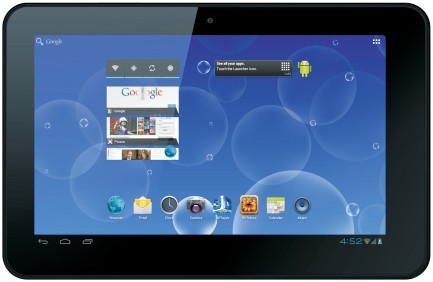
Back in January of 2012, I saw a demonstration at the Consumer Electronics Show of an autostereoscopic android tablet, and I was impressed by what I saw. There had already been several glasses-free tablets on the market, but they suffered from color-fringing issues that I found to be unacceptable. This tablet, however, appeared to have a much higher quality display. It was called the WikiPad, and the American company exhibiting it explained that they would hopefully have it in stores in several months - but that they were waiting for their Chinese manufacturer to go into production on the final model. I began to anticipate the day when this prototype would be released as an actual product.

Now, I had already been disappointed the year before, when a Korean company announced a passive polarized tablet, but failed to deliver. So it came as no surprise when WikiPad missed their release date, and then announced that they had dropped their 3-D functionality in the final version. The story, as I heard it, was that the Chinese manufacturer, a company called Gadmei, was experiencing delays and quality issues.
I had heard of Gadmei - they had already made several 3-D tablets and digital photo frames which, unfortunately, had all suffered from the color-fringing issue. But if they could work out the production problems with this new tablet, it could be a winner. In November of 2012, the internet message groups started buzzing with the news that Gadmei was preparing to finally release the tablet - now called the E8-3D - and that it would be available in China by the end of the year. In December, reports started coming in of the first batch of tablets being available through  a wholesale importer. I was intrigued, but the initial reviews reported some quality control issues with the barrier-screen, and some difficulties navigating the Chinese language menus.

January 2013 brought another CES, and this time Gadmei was actually there demonstrating the tablet themselves. Their display model looked great, so once again I got excited about it. I was aware that Gadmei’s products were sometimes re-branded and released in the USA by multiple distributors, so I decided wait to buy one until it was available locally.

I didn’t have to wait too long. As expected, this past spring several companies announced that they were releasing glasses-free 3-D tablets. A little research showed that while they were each branded differently, the Neo3DO, 3Dinlife, Aiptek, Nav3D, and 3D Window tablets were all the same Gadmei E8-3D. The only differences, as far as I could tell, were the pre-installed software, and the price (the lowest priced was over $100 cheaper than the most expensive one).


I ended up buying the “3D Window” from the 3DTV Corp. eBay store, and had the tablet in hand two days later (it shipped from Henderson, NV). It came with an AC battery charger, USB cable, USB adapter, and an HDMI video cable. I also picked up a tablet cover at my local Best Buy - the 7” Rocketfish brand cover fit perfectly. The tablet came with pre-installed 3DPlayer software from Viren, which allows viewing of streaming video from the internet, including Youtube 3-D, and playback of both 3-D video and still photos from the internal micro-SD card and from USB connected devices. I also purchased and installed Masuji Suto’s android app, 3DSteroid Pro, which brings the photo alignment tools of his Stereo Photo Maker program to the android platform. 

After two months of using the tablet, I am quite pleased with it. It’s a very capable android tablet, 3-D aside, and 3-D videos and photos look great on it’s 7” HD screen. Also, by using the USB adapter cable, I found that I am able to connect a  FujiFilm W3 or a Panasonic 3D1, and instantly look at photos directly from the camera. This is especially great for the Panasonic, which doesn’t have a 3-D display of it’s own! The one caveat I have for potential owners - dropping the tablet can knock the barrier out of alignment (learned the hard way).

A number of other LA 3-D Club members have also purchased this tablet. A Yahoo discussion group has been started, and a “3-D tablet Forum” has already held it’s first group meeting to discuss tips and tricks, compare notes, and help each other to get the most out of their devices. I would encourage anyone who gets one of these tablets to share their experiences with the club.

Friday, May 10, 2013

3-D’s Future - Dark or Bright?

This year I attended three conventions in Las Vegas - each one very different, yet connected, in a way, to the other two. They were the Consumer Electronics Show (CES) in January, the National Association of Broadcasters (NAB) in April, and CinemaCon, also in April. Each of these events hosted a trade show to demo the latest and greatest  new products for their respective markets. For CES, that meant the show floor was full of new televisions, cameras, cell phones and other elctronic devices for the home. NAB was a showcase for professional audio, video, cameras and related gear. And CinemaCon highlighted the newest developments in movie theater technology and the major studio motion picture releases for 2013. Each show floor was full of 3-D products, from 3DTVs, to beamsplitter rigs, to projection polarizers, to ‘Smurfs 2’. And the buzz and hype at each conference, particularly about the future of 3-D, was just as the conventions themselves - very different, yet connected.

At CES, 3-D had become rather ubiquitous, as it is now a standard feature in most of the high-end flat screen TVs on the market. And with the electronics manufacturers pushing for everyone to replace their TVs every two years, they were no longer using last year’s 3-D as a major selling point, having moved on to next year’s Ultra High Resolution 4K TVs (LG was the exception, with polarized 3-D everywhere at their large exhibit). This led various news outlets and blogs to announce that “3-D is DEAD!”

Interestingly, the latest future-tech to be shown at NAB’s Technology Summit was laser projection, which allows 3-D to be projected at brightness levels rivalling 2-D (which should eliminate the “3-D is too dim” complaint). But the show floor at NAB had also seemingly moved on from prior years’ hype of  3-D. Stereoscopic camera rigs and equipment were still to be found all over the show floor, but the companies making pro gear were more interested in promoting  higher resolutions and higher frame-rates. While the press covering NAB was far less certain about 3-D’s demise, there was definitely a pensive mood among the attendees, and a cautious optimism among 3-D pros.

CinemaCon, however, was another story. Over and over, the studios gave presentations touting the box-office succes of their 3-D blockbusters, and celebrating their rosters of 3-D pictures in production. And on the show floor, 3-D was everywhere, from the chinese knock-offs of the RealD Z-screen system, to the designer ‘Iron Man III’ and ‘Despicable Me 2’ glasses, to the newly released RealD Ultimate White non-depolarizing screen material (bright, even image, with no hot-spot). Sam Raimi was there, accepting an award for the use of 3-D in ‘Oz’, Guillermo Del Toro was there, promoting his new 3-D feature ‘Pacific Rim’ (giant robots fighting giant monsters!), and each studio showed trailers and clips of new and exciting 3-D movies (I’m most excited now about ‘Gravity’ from director Alfonso Cuaron). And the motion picture exhibitors, from the small indie screens to the large theater chains, were solidly on the 3-D bandwagon, demanding more. And not a single mention of HFR or 4K. At CinemaCon, content was King, and 3-D was not only alive and well, but thriving!

And while we are on the topic of 3-D movies, during CinemaCon,  director Oliver Stone told a panel that the first movie to ever scare him was ‘House Of Wax’ in 3-D, back in 1953. And this September, we will all have an opportunity to see what that experience was like when Jeff Joseph returns to the Egyptian Theater in Hollywood to present the ‘World 3-D Film Expo III’. Ten days of classic 3-D movies, most presented in dual-strip 35mm! Tickets and passes are available now, and as someone who was fortunate enough to have attended 3-D Expos I and II, I can tell you that you don’t want to miss this!